
Your Workplace Shouldn't Be a Copy — Why Great Office Design Starts With Your Organization's Unique DNA
Your office isn't a Silicon Valley startup, a coffee shop, or a hotel lobby. So why should it look and function exactly like one?
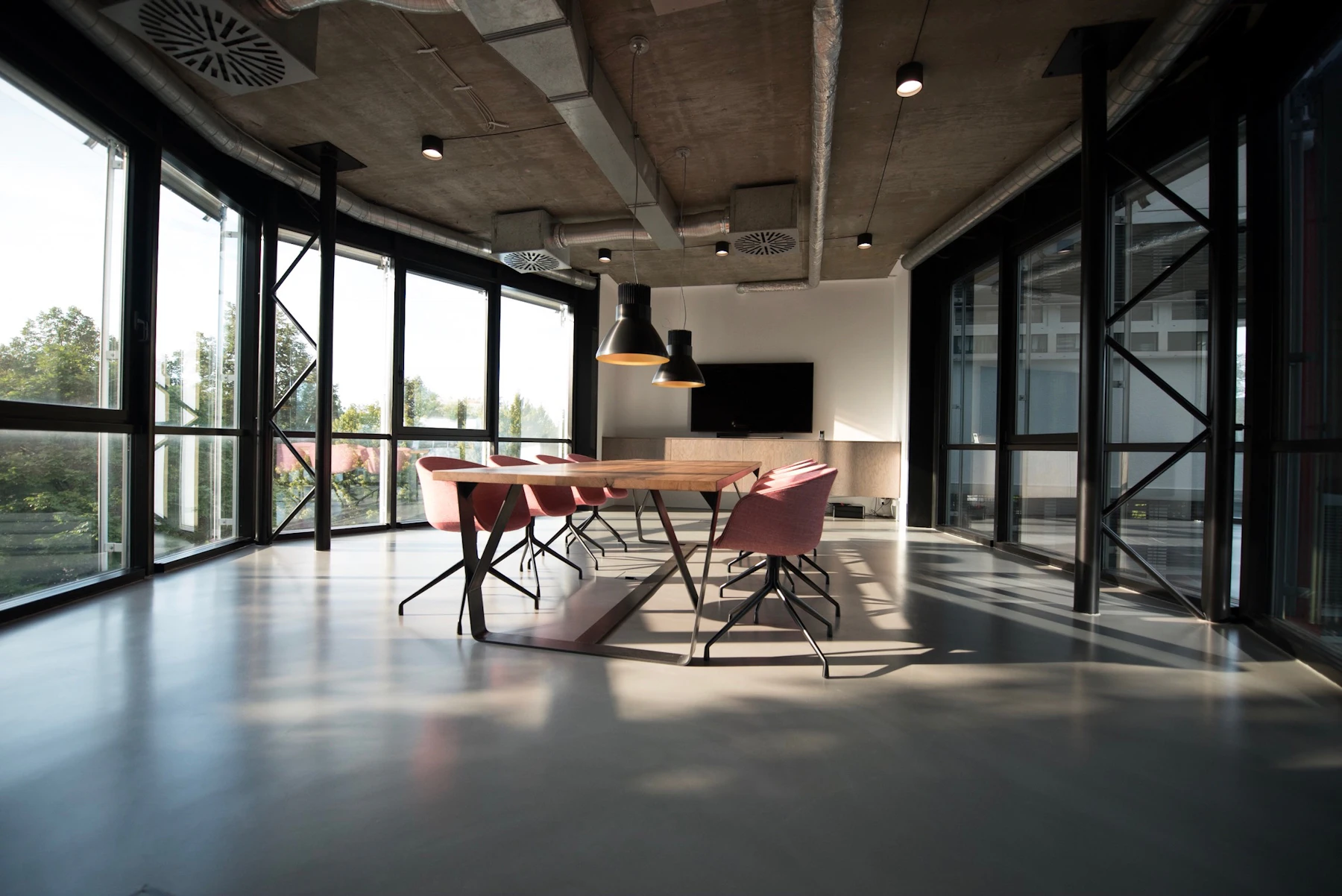
For years, workplace transformation has been heavily influenced by trends. One company introduces an open office, and suddenly open floor plans appear everywhere. Another installs soundproof pods, and they quickly become a symbol of the "modern workplace."
A global technology company creates gaming rooms, nap spaces, or elaborate cafés, and business leaders begin wondering whether their own offices need the same features. The intention is understandable. Organizations want modern workplaces. They want employees to feel engaged, productive, and inspired. They want offices that attract talent and communicate progress.
But copying another company's workplace is rarely the answer. A workplace is not a collection of fashionable furniture, trending design features, or ideas borrowed from successful brands. It is a business environment that should reflect the people, culture, operations, ambitions, and identity of the organization using it.
The most successful workplaces are not copied. They are designed around the unique reality of the organization.
At VSpaceZ, our work with organizations consistently reinforces this principle. The future of workplace design isn't about finding the next universal trend — it is about creating a workplace that genuinely belongs to the people and business it serves.
The Problem With Copy-Paste Workplace Design
Workplace trends spread quickly. A design concept appears in a high-profile headquarters, gets featured online, and soon organizations across completely different industries begin trying to recreate it. The pattern is familiar:
None of these ideas are inherently bad. In the right context, each can create significant value. The problem begins when organizations adopt them without asking why. A feature that works brilliantly for one organization may create frustration in another. A layout designed for a highly collaborative creative team may be completely unsuitable for employees performing confidential or highly focused work.
Context changes everything.
Yet workplace decisions are often influenced by what looks modern rather than what actually supports the organization.
There Is No Universal Formula for the Perfect Office
The idea of a universally perfect workplace is attractive. If organizations could simply follow a proven formula, transformation would be easy. Add collaborative spaces. Reduce assigned desks. Install a few meeting pods. Create a café. Introduce flexible seating. Transformation complete.
But organizations don't operate according to identical formulas. A financial services company has different requirements from a creative agency. A technology business works differently from a legal practice. A rapidly growing startup faces different challenges from an established global enterprise. Even two organizations in the same industry can have completely different cultures and working patterns.
A successful office for one organization may fail in another — not because the design is poor, but because it solves the wrong problems.
Your Workforce Is Not One Type of Person
One of the greatest weaknesses of one-size-fits-all design is the assumption that employees have similar needs. They don't. A workforce is a complex ecosystem of different:
Some employees perform best in highly social environments. Others require extended periods of uninterrupted concentration. A salesperson may spend much of the day on calls. A designer may need both collaborative workshops and focused creative time. A finance professional may require privacy. A new employee may benefit from greater access to colleagues and mentors. How could one standardized environment support all of these people equally? It usually can't.
The solution is not to design a separate office for every employee. It is to create a thoughtful variety of environments that support the actual diversity of work.
Stop Designing Around Trends. Start Designing Around Tasks.
A more useful starting point for workplace strategy is not "What is currently popular?" but "What do our people actually need to do?" Work generally involves different modes of activity — and each may require a different type of environment:
-
Focus
Extended, uninterrupted attention on demanding individual work.
-
Collaboration
Teams working through problems and building on each other's thinking.
-
Communication
Everyday exchange — quick updates, calls, and coordination.
-
Learning
Training, mentoring, and building capability over time.
-
Social Connection
The informal moments where relationships and trust are built.
-
Confidential Discussions
Conversations that require genuine privacy and discretion.
-
Creative Thinking
Space to explore, experiment, and develop new ideas.
-
Recovery
Time to step back, recharge, and return with renewed focus.
A brainstorming workshop and a detailed financial analysis should not necessarily happen in the same setting. A confidential conversation requires different conditions from an informal team discussion. A workplace should provide employees with the right environment for the task they are performing. This is where thoughtful strategy becomes significantly more valuable than trend-driven design.
The Open Office Is a Perfect Example
The rise of open-plan offices demonstrates the risks of universal workplace solutions. Open offices were introduced with positive intentions — better communication, fewer hierarchical barriers, more spontaneous collaboration. The results, however, split sharply by context.
What openness promised
- Better communication
- Fewer hierarchical barriers
- Spontaneous collaboration
- Greater visibility across teams
What it created for others
- Noise
- Distractions
- Reduced privacy
- Difficulty concentrating
- Constant interruptions
The problem wasn't necessarily openness itself. The problem was applying openness everywhere. An organization might benefit from collaborative open areas while still requiring quiet zones, private rooms, and focused workspaces.
No single workplace concept should dominate without considering the actual needs of the people using it.
Your Workplace Should Reflect Your Culture
Every organization has a culture, whether intentionally designed or not. Some are highly structured; others entrepreneurial. Some value deep individual expertise; others depend on constant cross-functional collaboration. Some operate through formal processes; others move through rapid experimentation. The workplace should support these behaviors.
If an organization values collaboration but provides no effective spaces for teams to gather, there is a disconnect. If a company promotes well-being while providing an uncomfortable, stressful environment, there is a contradiction. If leadership talks about innovation while the workplace discourages experimentation and interaction, the physical environment is working against the cultural message.
The best workplaces make culture visible. They translate values into everyday experiences.
Brand Identity Goes Beyond Logos and Colors
Many organizations think of workplace branding as placing logos on walls and applying corporate colors to furniture. Brand identity is much deeper. A workplace can communicate who the organization is, what it values, how it works, and what experience it wants to create.
A premium professional services company may require a very different environment from an energetic consumer brand. A company built around sustainability may integrate natural materials and responsible design choices. A business focused on innovation may prioritize flexible spaces that support experimentation. The workplace should feel authentic — employees and visitors should experience the organization's identity, not simply see its logo.

"Copying another company's workplace is like wearing someone else's tailored suit. Beautifully made — but it won't fit."On inspiration versus imitation
Copying Famous Companies Won't Copy Their Success
Google's workplace became famous for playful environments and unconventional amenities. Other global technology companies introduced cafés, gaming areas, relaxation spaces, and highly flexible work environments. These features became symbols of innovation. But copying the visible features of successful companies does not reproduce the systems that made those companies successful.
A nap pod doesn't create innovation. An arcade room doesn't create engagement. A coffee bar doesn't create collaboration. These elements only create value when they support a broader culture and workplace strategy.
The visible office is only one layer of an organization. Behind it sit leadership practices, management systems, talent strategies, communication patterns, technology, and culture. Copying the surface while ignoring the underlying system is unlikely to produce the same result.
Workplace Strategy Should Begin With Listening
Before redesigning a workplace, organizations need to understand the current experience. That requires listening. Employees can provide valuable insight into questions such as:
- Where do you work most effectively?
- What regularly interrupts your concentration?
- Which spaces are difficult to use?
- Where does collaboration happen naturally?
- What workplace frustrations consume your time?
- What environments are currently missing?
Observation is equally important. What employees say they need and how they actually use spaces may sometimes differ. Workplace strategy can benefit from examining:
The objective is not to follow every individual preference. It is to identify patterns and design around real organizational needs.
Bespoke Doesn't Mean Expensive
The word "bespoke" is sometimes associated with luxury and high cost. In workplace strategy, bespoke simply means fit for purpose. A tailored workplace doesn't necessarily require the largest budget — it requires better decisions.
An organization may discover employees need fewer desks and more focus areas. Another may require improved meeting technology rather than major construction. Another may need to reconfigure existing furniture instead of replacing it.
The most effective solution isn't the most expensive. It's the one that addresses the right problem.
Strategic design can often reduce waste, because organizations stop investing in features employees don't need.
The Workplace Must Support Business Operations
A workplace should never be designed independently from the way the business operates. Consider questions such as:
- How frequently do teams collaborate?
- How much confidential work takes place?
- How many employees are regularly in the office?
- What role does hybrid work play?
- How are clients welcomed?
- Which technologies are essential?
- How might the organization grow?
These operational realities should influence workplace decisions. A visually impressive office that creates daily operational friction is not successful design. Function and experience must work together.
Hybrid Work Makes Customization Even More Important
Hybrid work has made copy-paste workplace strategies even less effective. Different organizations use hybrid differently. Some teams meet in person several times each week; others are primarily remote. Some offices function as collaboration hubs; others remain the primary location for focused individual work.
There is no universal hybrid office.
Organizations need to understand why employees come to the workplace. If people primarily visit for collaboration, the office should support high-quality interaction. If employees need quiet environments unavailable at home, focus spaces become essential. The office should respond to the organization's actual hybrid behavior rather than following generic assumptions.
Flexibility Is More Valuable Than Fashion
Work will continue changing. The workplace that perfectly supports an organization today may need to evolve tomorrow. For this reason, flexibility is one of the most valuable characteristics of modern workplace design. Flexible environments can include:
The objective isn't constant redesign. It is creating an environment capable of responding to change. A trend may disappear — a flexible workplace can evolve.
Measure Success by Performance, Not Appearance
Workplace design is highly visual, which makes it easy to judge success based on appearance. But a beautiful office can still be dysfunctional. A successful workplace should be evaluated through outcomes such as:
- Employee satisfaction
- Productivity
- Collaboration quality
- Space utilization
- Well-being
- Talent retention
- Operational efficiency
The question is not simply "Does the office look impressive?" It is "Does the office help the organization and its people perform better?" That is a much higher standard.
The VSpaceZ Approach: Design Around Organizational DNA
At VSpaceZ, we believe every organization has its own workplace DNA — shaped by a set of elements that a successful strategy should bring together:
-
People
How your teams actually work, collaborate, and concentrate day to day.
-
Culture
The behaviors and values the environment should make visible.
-
Brand
An identity people experience in the space, not just see on a wall.
-
Operations
The practical rhythms of the business the office has to serve.
-
Technology
Digital and physical experiences designed to work as one system.
-
Goals & Ambitions
Where the business is heading, and how the space can help it get there.
Our experience working with diverse organizations continually reinforces that tailored solutions create stronger outcomes than generic formulas. The objective isn't to create an office that looks like someone else's headquarters — it is to create a workplace that feels unmistakably right for your organization. That requires curiosity before design. Listening before assumptions. Strategy before aesthetics.
Moving Beyond the Copy-Paste Culture
Organizations should certainly learn from successful workplaces — inspiration is valuable. The problem is imitation without understanding. Before adopting any workplace trend, leaders should ask:
- What problem does this solve?
- Do our employees actually need it?
- Does it support our culture?
- Does it align with our operational model?
- How will we measure its value?
If there is no convincing answer, the trend may not belong in the workplace. The strongest workplace strategies are selective — they borrow ideas when those ideas make sense, and reject them when they don't.
Final Thoughts
Your organization is unique. Your people are unique. Your culture, operations, goals, challenges, and ambitions are unique. Your workplace strategy should be unique too. There is nothing wrong with studying innovative offices or learning from global organizations — but inspiration should be a starting point, not a blueprint.
The future of workplace design belongs to organizations willing to move beyond generic solutions. It belongs to leaders who ask better questions, who listen to employees, who understand how work actually happens, and who connect physical space with culture, technology, and business strategy. At VSpaceZ, we believe the best workplace isn't the one that follows the most trends — it is the one that understands its purpose.
Stop copying the workplace of someone else's future. Start designing your own.
So perhaps it's time to stop asking, "What are the world's most innovative companies doing with their offices?" And start asking: What does our organization genuinely need to perform at its best?
Because the goal should never be to create another version of someone else's workplace. The goal is an environment that reflects the unique DNA of your organization while giving your people the spaces, tools, and experiences they need to succeed.
