
Empty Meeting Rooms Aren't Always a Space Problem — What Your Workplace Is Really Telling You
An office full of empty meeting rooms looks like a space problem. Often it's a behavior problem wearing a space problem's clothes.
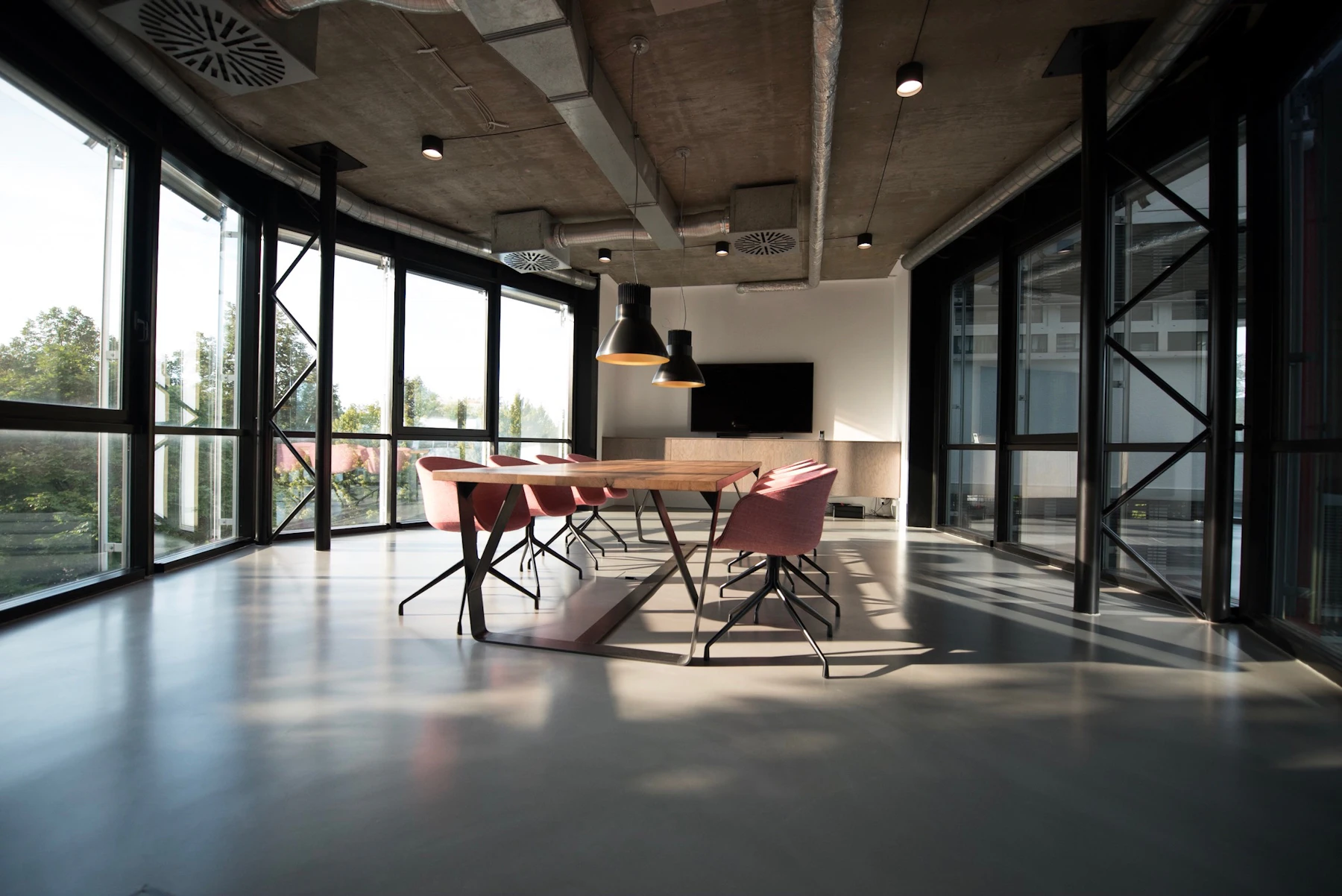
Walking through an office filled with unoccupied meeting rooms can create an immediate sense of concern. Leaders see empty rooms and naturally begin questioning their workplace strategy. Are we carrying too much space? Did we overestimate our meeting requirements? Should we reduce our office footprint?
These are reasonable questions. But there is another possibility organizations often overlook.
The problem may not be the amount of space. It may be the way people are using it.
An empty meeting room doesn't automatically indicate poor space planning. Sometimes it is a visible symptom of something happening beneath the surface: workplace habits, organizational culture, meeting behaviors, and outdated assumptions about how teams should collaborate. At VSpaceZ, we frequently encounter this during workplace strategy projects — organizations see underutilized rooms and immediately look at the physical environment for answers. But when we examine how those spaces are actually being used, another story often emerges: rooms booked "just in case," reserved hours in advance, held longer than necessary, meetings continuing simply because the room was already booked.
The result is a workplace that appears to have too much space when, in reality, it may have a meeting culture problem. Before redesigning the office, leaders may need to redesign the behavior.
The Natural Instinct to Blame Space
When something appears inefficient in a physical environment, space is often the easiest explanation. An empty meeting room is visible. A vacant desk is visible. An underused floor is visible. But workplace behavior is much harder to see. Leaders can physically walk through their offices and observe empty rooms — what they cannot immediately see is why those rooms are empty.
Perhaps the room was booked but the meeting was cancelled. Perhaps someone reserved it as a precaution. Perhaps the team moved to another space. Perhaps the meeting became a virtual call. Perhaps the room is only used during specific periods of the day.
The physical evidence tells us what happened. It doesn't tell us why.
The "Just in Case" Meeting Room
One of the most common behaviors organizations encounter is preemptive booking. Employees know that meeting rooms can be difficult to find, so they reserve one before they actually need it. The reasoning is understandable: "I'd rather book it now than discover later that there isn't a room available."
One person does it. Then another. Eventually, teams begin reserving rooms defensively and the behavior becomes normalized. Meeting rooms that appear highly demanded on booking systems may actually be underutilized in practice — a room can technically be "booked" while remaining completely empty. This creates an important distinction between space demand and space utilization. They are not the same thing.
When Scarcity Creates Artificial Demand
Imagine an organization where employees regularly struggle to find meeting rooms. They begin booking spaces earlier. Others notice and do the same. Soon the calendar appears completely full. Leadership sees the data and concludes: "We need more meeting rooms." Additional rooms are created — but the underlying behavior doesn't change. Employees continue booking defensively. Now the organization has more rooms, but the same inefficient booking culture.
The problem isn't necessarily a shortage of space. It may be a lack of trust in the availability system.
Meeting Rooms Can Become "Ghost Spaces"
A particularly interesting phenomenon occurs when meeting rooms are frequently reserved but rarely occupied. These spaces become what could be described as ghost rooms. They exist physically. They exist on booking calendars. But they don't consistently contribute to workplace activity. From a distance, they look like evidence of excess real estate — but they may actually be evidence of inefficient behavior.
This distinction matters because the wrong diagnosis leads to the wrong solution. Treat ghost rooms as a space problem, and you reduce the number of rooms. Treat them as a behavioral problem, and you can investigate why rooms are being reserved and build better systems. The second approach may create far greater long-term value.
The Meeting Culture Problem
Many organizations have never intentionally designed their meeting culture. Meetings simply accumulate. A weekly meeting becomes a monthly meeting. A project requires another recurring call. A leadership update becomes another calendar invitation. Soon, employees spend much of their working week inside meetings, and the physical workplace reflects this culture — meeting rooms become central to daily operations.
But the existence of many meetings doesn't necessarily mean organizations are collaborating effectively. Sometimes it indicates that teams haven't developed better ways to communicate.
Not Every Conversation Needs a Meeting Room
Modern workplaces often treat meetings as the default solution to every communication challenge. Need to make a decision? Schedule a meeting. Need to share an update? Schedule a meeting. Need feedback? Schedule a meeting. Need to brainstorm? Schedule a meeting.
But different forms of communication require different environments. Some information can be shared asynchronously. Some decisions require only a short conversation. Some discussions benefit from a physical meeting. Some collaborative work needs a workshop environment.
The challenge is not eliminating meetings. It is making meetings purposeful.
The Hidden Cost of Poor Meeting Habits
Ineffective meeting culture creates more than calendar congestion. It can influence:
When employees spend excessive time moving between meetings, they have less uninterrupted time for meaningful work. When meetings are scheduled unnecessarily, rooms become occupied by low-value interactions. When teams reserve spaces defensively, actual space demand becomes difficult to understand. The consequences extend beyond the calendar — they eventually influence workplace strategy.
Space Utilization Data Needs Context
Workplace analytics can provide powerful insights. Organizations can measure room bookings, occupancy, desk utilization, peak demand, meeting duration, and cancellation rates. These metrics are valuable — but data without behavioral context can be misleading. A meeting room with a 90% booking rate may sound heavily utilized. But what if 40% of those bookings are never used? A room with low booking activity may appear unnecessary. But what if it is intentionally reserved for confidential or executive meetings?
Numbers tell us what is happening. Observation and employee insight explain why.
The Difference Between Booking and Occupancy
This distinction deserves particular attention. They are fundamentally different measurements — and confusing them is how organizations end up expanding space they don't actually need.
Booking — someone reserved the room
- Shows demand, real or defensive
- Inflated by "just in case" holds
- Can read as 90% full while half sits empty
- Overestimating it leads to unnecessary expansion
Occupancy — someone actually used it
- Shows what really happened in the space
- Reveals the gap between held and used
- Average alone can hide peak-period shortages
- Read together with booking, it guides real decisions
The answer is not to choose one metric. It is to understand the relationship between them. When leaders examine booking patterns alongside actual behavior, they can make far more informed decisions about workplace capacity.
Cultural Habits Can Dictate Physical Space
One of the most important lessons from workplace strategy is that physical environments and organizational behavior influence each other. People adapt their behavior to spaces — but spaces also reinforce behavior. If meeting rooms are difficult to access, employees book them excessively. If collaboration areas are limited, teams rely more heavily on formal meeting rooms. If quiet spaces don't exist, employees use meeting rooms for individual work. If remote meetings are common, rooms remain occupied by people attending virtual calls individually.
The workplace is part of a larger behavioral system. Change the space without understanding the system, and results disappoint.

What If the Office Is Not the Real Problem?
This is perhaps the most important question leaders should ask. Before concluding that the organization has too much meeting space, examine the behavior surrounding that space:
- Why are rooms being booked?
- How often are reservations cancelled?
- How frequently are rooms empty during booked periods?
- Are employees reserving multiple rooms?
- How long do meetings actually last?
- Are people using rooms for activities they weren't designed for?
- Are there enough alternative spaces?
- Are employees comfortable releasing rooms they no longer need?
These questions can reveal whether the issue is spatial, technological, behavioral, or cultural. Often, it is a combination.
"An empty room isn't necessarily inefficient. A full room isn't necessarily productive."On measuring usefulness, not occupancy
Designing Better Meeting Behaviors
Organizations can improve space efficiency without immediately changing the physical footprint. A few behavioral shifts do most of the work:
-
Release Unused Rooms
If a meeting is cancelled, free the room immediately for someone else.
-
Avoid Defensive Booking
No one should have to hoard a room out of fear it won't be there later.
-
Match Room to Meeting
A two-person chat doesn't need a ten-person conference room.
-
Use the Right Channel
Not every interaction needs a formal meeting in the first place.
-
Set Clear Booking Policies
Simple, shared guidelines quietly reduce unnecessary reservations.
These changes may appear small. Collectively, they can significantly improve the accuracy of workplace utilization data.
Technology Can Help — but It Isn't the Whole Solution
Workplace technology can make meeting room management more effective. Organizations can use room booking systems, occupancy sensors, calendar integrations, digital room displays, and utilization analytics. These tools help employees find available spaces and help leaders understand usage patterns.
If employees keep reserving rooms unnecessarily, a sophisticated booking system will simply document the problem more efficiently.
Technology should support behavioral change. It should not be expected to replace it.
The Role of Workplace Design
While behavior matters, physical design still plays an important role. The objective should be to create a variety of environments that reflect actual work patterns. Instead of filling an office with traditional meeting rooms, organizations may benefit from a broader mix:
This allows employees to choose environments based on the activity taking place. A better variety of spaces can reduce pressure on traditional conference rooms.
Meeting Rooms Should Have a Purpose
Not every meeting room needs to perform the same function. A small room may support confidential one-to-one conversations. A medium-sized space may support team discussions. A larger room may support workshops. An informal area may support quick conversations. This approach creates a more efficient workplace ecosystem.
Rather than asking "How many meeting rooms do we need?", ask "What types of collaboration do our employees actually perform?"
That question produces a much more useful design response.
Workplace Strategy Starts With Behavior
A successful workplace strategy isn't simply about calculating square footage — it involves understanding how people work. That means observing movement, collaboration, focus, meetings, social interaction, and space selection. Behavior provides context for data. It explains why employees choose certain environments and avoid others. This is why workplace strategy should combine analytics with human observation. The workplace is ultimately a human system.
The VSpaceZ Perspective: Look Beyond the Empty Room
At VSpaceZ, our workplace strategy projects repeatedly demonstrate that underutilized space should not immediately be treated as wasted space. An empty room is a question, not an answer. It asks us to investigate — why is it empty? How is it being booked? What happens before and after meetings? Are employees choosing other environments? Are organizational habits influencing utilization?
These questions often uncover opportunities that aren't visible through floor plans alone. Sometimes the answer is a redesign. Sometimes it is a policy change. Sometimes it is better technology. And sometimes the biggest opportunity is simply changing workplace behavior.
From Space Management to Behavior Management
Traditional workplace planning often focuses on physical resources — how many desks, how many rooms, how much square footage. Modern workplace strategy needs to go further and also consider: how are people using these resources?
A workplace can have the perfect amount of space and still perform poorly if employees use it inefficiently. Conversely, an organization may appear to have insufficient space when better behaviors and better zoning could solve the problem. This is why space efficiency should be understood as a combination of physical design and human behavior.
Don't Redesign Before You Diagnose
One of the most expensive mistakes an organization can make is redesigning the workplace before understanding the underlying problem. If meeting rooms appear underused, don't immediately remove them. If desks appear vacant, don't immediately reduce the footprint. If collaboration spaces are busy, don't immediately build more. First, investigate:
- Understand patterns
- Talk to employees
- Analyze utilization
- Observe behavior
- Then make decisions
A workplace redesign should solve a clearly identified problem. It should not simply react to what appears visually inefficient.
The Future of Space Efficiency Is More Intelligent
As organizations become more data-driven, workplace strategy will increasingly combine technology, analytics, and human insight. Future workplaces can use real-time information to understand:
- When spaces are occupied
- Which environments are most valuable
- Where demand occurs
- Which rooms are consistently underused
- How teams collaborate
But data should support better decisions — not replace human judgment. The objective is not to maximize occupancy. It is to maximize usefulness. The real measure is whether the environment supports the work employees need to perform.
Final Thoughts
An office filled with empty meeting rooms can look like a space planning failure. But appearances can be deceptive. Those empty rooms may represent excess capacity — or they may represent something much more interesting: organizational habits, defensive booking, ineffective meeting practices, unclear policies, or a mismatch between how employees work and how spaces are managed.
At VSpaceZ, we believe leaders should resist the temptation to blame the physical workplace before understanding the behavior behind it. Because sometimes the answer isn't another meeting room. It isn't fewer meeting rooms either. It may simply be a better understanding of how people work. So before you redesign your office, reduce your footprint, or convert another conference room into desks, take a closer look at the habits behind the numbers.
Your empty meeting rooms may not be telling you that you have too much space. They may be telling you it's time to rethink how your organization works.
The most important question isn't "Why do we have so many empty rooms?" It is: Why are people reserving and using these spaces the way they do?
That shift in perspective can change the entire workplace strategy — because the answer often isn't more space, or less space, but a better understanding of how people work.

